Business
R6 Marketplace Guide for Rainbow Six Siege Trading

Introduction to R6 Marketplace System
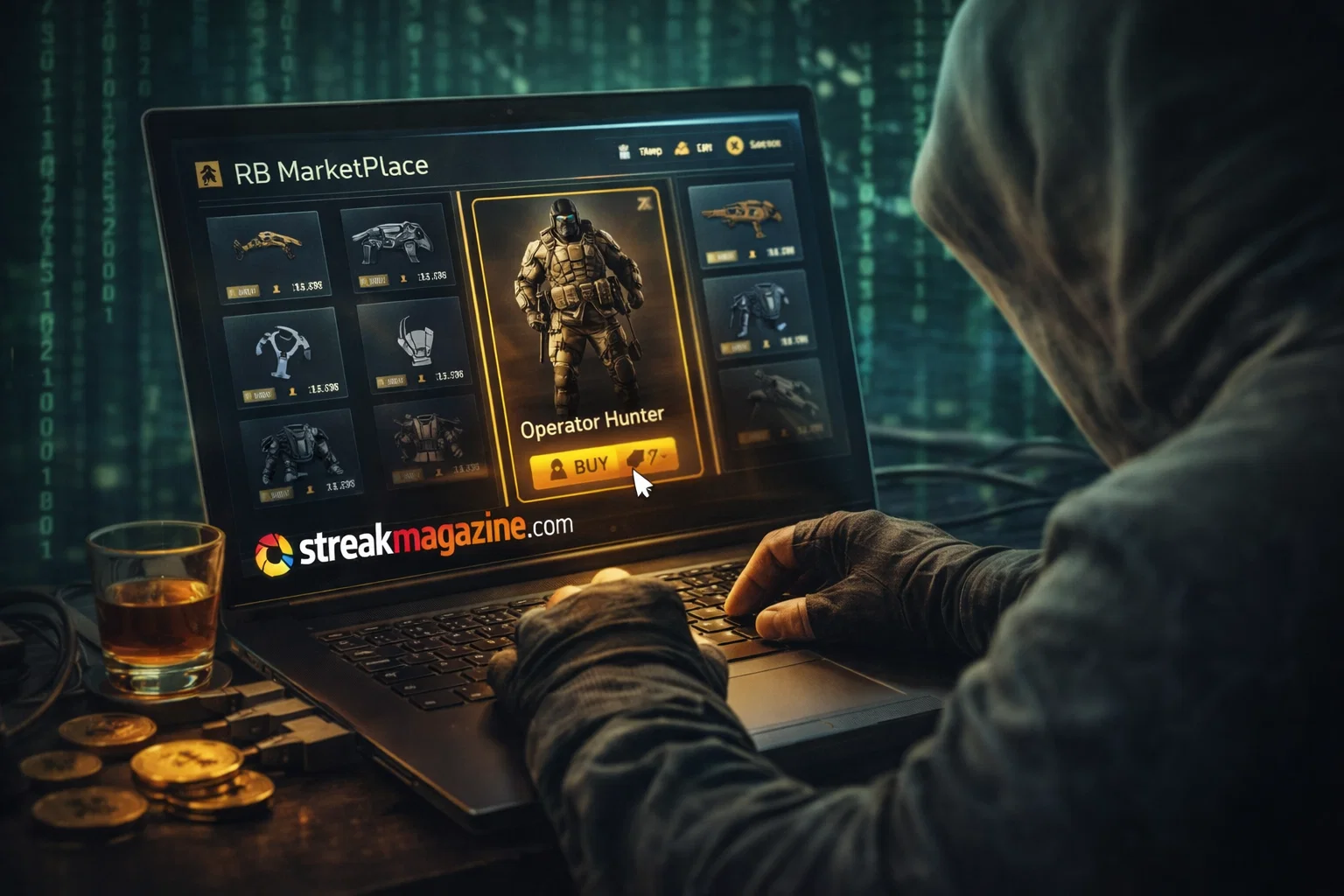
The R6 marketplace is the official trading system inside Rainbow Six Siege that allows players to interact with cosmetic items in a controlled digital environment. It is built by Ubisoft and works through Ubisoft Connect. This system focuses only on cosmetic items, which means it does not affect gameplay balance or competitive performance. Instead, it focuses on visual customization and player expression.
In the Rainbow Six Siege ecosystem, cosmetics have become an important part of player identity. Skins, charms, uniforms, and other items help players personalize their operators. Over time, these items gained value based on rarity and demand, which led Ubisoft to create a structured marketplace system. The goal was to replace unsafe third-party trading methods with a secure official platform.
The in-game economy now revolves around digital collectibles where items are linked directly to player accounts. Every transaction is recorded inside the system, and ownership is transferred securely without direct player interaction. This reduces risks and builds trust in the system.
The marketplace also introduces a controlled environment where item availability depends on eligibility rules. Some items are always available, while others are restricted based on seasons or special events. This balance keeps the economy stable and prevents uncontrolled inflation of rare cosmetics.
Quick Bio
| Feature | Description |
|---|---|
| Marketplace Name | R6 Marketplace |
| Game | Rainbow Six Siege |
| Developer | Ubisoft |
| Platform | Ubisoft Connect |
| Main Purpose | Buy and sell cosmetic items |
| Currency | R6 Credits |
| System Type | Order-based system |
| Trading Type | Account-based trading |
| Item Focus | Cosmetic items only |
How the R6 Marketplace Works in Real Gameplay
The rainbow six siege marketplace operates through an automated order matching system that connects buyers and sellers without direct communication. This system is designed to make trading smooth, fast, and secure. Players do not trade directly with each other. Instead, they interact with a structured system that processes buyer orders and seller listings.
When a player wants to purchase an item, they use r6 credits to place a buy order. Another player lists the same item at a chosen price. The system then matches both sides and completes the transaction. This reduces confusion and removes the need for manual negotiation between players.
The marketplace interface is built inside Ubisoft Connect, where players can browse available items, check pricing trends, and monitor market activity. The system uses a price matching system that automatically adjusts based on demand and supply. If multiple buyers want the same item, prices may rise. If sellers increase supply, prices may stabilize or drop.
This structure creates a living economy inside the game where every item has movement based on player behavior. It also ensures secure transactions because all actions happen inside Ubisoft’s controlled environment.
Items Available in the Marketplace
The ubisoft marketplace includes a wide range of cosmetic items that allow players to customize their in-game experience. These items are purely visual and do not affect gameplay mechanics. However, they play a major role in identity and personal style.
Players can access weapon skins that change the appearance of guns used in matches. Operator skins change how characters look, while headgear and uniforms allow deeper customization. Charms add small visual details that attach to weapons. Bundles combine multiple cosmetics into a single package, often linked to events or special promotions.
Alpha packs and battle pass items also appear in the system depending on eligibility. Some seasonal cosmetics become available only for limited periods, which increases their value over time. Esports skins are tied to competitive events and often become highly desirable among players.
Not all items are tradeable items. Some remain locked due to restrictions, while others become non-tradeable items after certain updates. This system helps control market balance and prevents excessive trading of rare cosmetics. Limited-time items and discontinued cosmetics often gain higher value because of scarcity, making them more attractive to collectors.
Buying Items in R6 Marketplace
Buying items in the R6 marketplace is designed to be simple and structured. Players use r6 credits as the main in-game currency. These credits can be obtained through gameplay progression or purchased through Ubisoft Connect.
The buying process starts with browsing the marketplace interface. Players search for cosmetic items based on categories such as weapon skins or operator skins. Each item displays current market listings, price trends, and availability status. Once a player selects an item, they place a buyer order at a chosen price.
After the order is placed, the system waits for a matching seller listing. When both conditions align, the transaction completes automatically. The item is then transferred to the player’s inventory and becomes part of their account-based collection.
Market demand plays a major role in pricing. Items with higher demand may take longer to purchase at lower prices. Players often study pricing systems and live marketplace pricing system trends before placing orders. This helps them make better decisions and avoid overpaying.
Selling Items in R6 Marketplace
Selling items in the marketplace requires eligibility and access to tradable items. Players start by selecting items from their inventory that are allowed for listing. Once selected, they create a seller listing and assign a price based on current market conditions.
The system then places the item into market listings where it becomes visible to potential buyers. Sellers monitor demand and adjust pricing when needed. When a buyer order matches the listing price, the system completes the transaction and transfers r6 credits to the seller.
Selling success depends heavily on understanding pricing patterns. Items that are rare or in high demand often sell faster. Seasonal cosmetics and esports skins also perform differently depending on current player interest.
The marketplace ensures fairness by limiting manipulation. Sellers cannot bypass system rules or directly negotiate prices. Everything is handled by automated matching, which keeps the environment stable and transparent.
Pricing System and Item Valuation
The pricing system in the skin marketplace is based on supply and demand. Each item has a value that changes depending on how many players want it and how many copies are available in the system. This creates a dynamic pricing environment where no item stays fixed in value for long periods.
Item rarity plays a major role in valuation. Rare skins and discontinued cosmetics usually have higher demand because they are difficult to obtain. Seasonal cosmetics may also increase in value after the season ends. Player behavior strongly influences pricing trends, especially when popular items return to attention.
Item valuation is also affected by cosmetic customization trends. Some skins become popular due to esports visibility or content creators using them. This increases demand and shifts pricing patterns quickly.
The system allows price fluctuation while maintaining balance through automated controls. This prevents extreme inflation and keeps the economy stable over time.
Security, Fraud Protection, and Account Safety
Security is a major part of the R6 marketplace system. Ubisoft designed it to protect players from fraud and unauthorized trading activities. All transactions occur inside Ubisoft Connect, which provides a controlled environment for trading.
Two-factor authentication is strongly recommended for account protection. It adds an extra layer of security during login and trading activity. The system also uses fraud protection tools that monitor unusual behavior and prevent suspicious transactions.
Escrow systems are used to hold items or credits during transactions until both sides are confirmed. This reduces risk and ensures secure transactions. Because everything is tied to account-based trading, players do not interact directly, which removes common risks found in external trading systems.
Players are encouraged to avoid third-party trading platforms, as these often involve high risks and are not supported by Ubisoft.
Marketplace Eligibility and Restrictions
Marketplace eligibility determines which items can be traded. Not all items in Rainbow Six Siege are available for listing or purchase. Ubisoft sets specific rules to maintain balance and fairness in the economy.
Some battle pass items are locked permanently after a season ends. Certain limited editions remain restricted due to licensing or event conditions. Account level requirements may also affect access to trading features. Regional restrictions can sometimes apply based on platform availability.
These rules help maintain structure in the in-game item marketplace system. They also prevent oversaturation of rare cosmetics and ensure that item value remains meaningful over time.
Rare Skins and Market Demand Trends
Rare skins play a major role in the Rainbow Six Siege economy. Players often search for exclusive cosmetics that are no longer available through regular gameplay. These items include esports skins, event rewards, and discontinued cosmetics.
Market demand increases when a skin becomes popular in the community. This can happen due to competitive usage or content creator influence. When demand rises, prices also increase due to limited supply.
Limited edition cosmetics are especially valuable because they are tied to specific time periods. Once those periods end, the items cannot be obtained again, which increases scarcity.
The system naturally creates cycles where certain skins rise and fall in popularity. This keeps the marketplace active and constantly changing.
Risks and Safe Trading Practices
Although the marketplace is secure, players still need to understand risks associated with cosmetic trading. One common issue is misjudging item value and overpaying for cosmetics. Another is misunderstanding eligibility rules, which can lead to confusion when listing items.
Third-party trading risks are also present outside the official system. Many unsafe platforms attempt to attract players with fake offers. These platforms are not supported by Ubisoft and can lead to account loss or fraud.
Safe trading practices include using only the official Ubisoft marketplace system, enabling account security features, and verifying item rarity before purchase or sale. Players should also avoid sharing account details with external sources.
Following these practices helps maintain safety and ensures smooth trading experiences.
Why Players Use R6 Marketplace
Players use the marketplace for several reasons related to customization and economy participation. One major reason is access to rare skins that are no longer available through normal gameplay. Another reason is the ability to safely buy and sell items without relying on external systems.
The marketplace also improves cosmetic customization by allowing players to collect items they prefer. It gives structure to digital item trading and creates a fair environment where value is determined by real player demand.
Many players also use it to manage inventory items efficiently. Instead of holding unused cosmetics, they can trade them for r6 credits and reinvest in other items.
Marketplace Fees and System Rules
The marketplace includes transaction fees that apply to certain trades. These fees help maintain system operations and ensure stability. Players should consider fees when setting prices for seller listings.
System rules enforce structured trading behavior. All trades must go through the order matching system, and direct negotiation is not allowed. Pricing is controlled through automated mechanisms that reflect supply and demand.
These rules prevent manipulation and ensure fair access for all players in the gaming marketplace economy. They also keep item trading consistent and predictable.
Live Market Trends and Economy Behavior
The in-game cosmetic marketplace trends change frequently based on updates, seasons, and community interest. When a new season launches, demand for certain cosmetics increases. Esports events also influence item popularity.
Item rarity and timing play a strong role in price movement. When supply is limited, prices rise. When new content is introduced, older items may decrease in demand temporarily.
This creates a living economy where items constantly shift in value. Players who understand these patterns can make better decisions in buying and selling activities.
Future of R6 Marketplace System
The marketplace is expected to grow as Ubisoft continues improving Rainbow Six Siege systems. More cosmetic items may become tradeable, and the interface may become more advanced over time.
Future improvements may include better filtering tools, enhanced pricing insights, and expanded marketplace features. The goal is to improve user experience and strengthen the in-game economy.
As the player base grows, the system will likely evolve to support more digital collectibles and smoother trading processes.
Conclusion
The R6 marketplace has changed how players interact with cosmetics in Rainbow Six Siege. It provides a safe and structured system for buying, selling, and managing cosmetic items using r6 credits. With automated matching, strong security systems, and controlled pricing models, it creates a balanced in-game economy.
Players now have a reliable way to engage with digital collectibles without relying on unsafe external platforms. The system continues to evolve and plays a major role in shaping the future of cosmetic trading inside Ubisoft games.
FAQs
1. What is R6 Marketplace used for?
It is used for buying and selling cosmetic items like skins, charms, and bundles in Rainbow Six Siege.
2. How do I access R6 Marketplace?
You access it through Ubisoft Connect where the marketplace interface is available.
3. What currency is used in the marketplace?
Players use r6 credits as the main in-game currency for all transactions.
4. Can all skins be traded?
No, only eligible items approved by Ubisoft can be listed or purchased.
5. Is R6 Marketplace safe?
Yes, it is a secure system with fraud protection, account security, and automated transactions.

The world does not wait for slow thinkers. Markets collapse overnight. Technologies make entire industries obsolete within months. A strategy that worked last year may be a liability today. In this kind of environment, leaders cannot afford to work in isolation. They need a platform where serious thinkers meet, challenge each other, and build ideas that actually move things forward. That is exactly what the Kellogg Innovation Network was built to do and it has been doing it since 2003.
What Is the Kellogg Innovation Network and Why Does It Exist?
The Kellogg Innovation Network, commonly known as KIN, is a global executive platform connected to the Kellogg School of Management at Northwestern University. It was created to bridge the gap between academic research and real-world leadership. Most business networks at the time were built around industry contacts, visibility, and deal flow. KIN was built around something harder to find: depth.
From day one, the network brought together a deliberately curated group C-suite leaders, entrepreneurs, policy makers, academic researchers, and innovation strategists not to exchange business cards, but to wrestle with the world’s most complex challenges together. The founding belief was straightforward: no single sector, company, or government can solve systemic global problems alone. Real progress requires cross-sector collaboration, sustained over time, grounded in evidence.
That belief still drives every event, every summit, and every conversation inside the network today.
The Academic Foundation That Makes KIN Different
Most executive networks have no intellectual anchor. They are built on convenience who you already know, what industry you are already in. The Kellogg Innovation Network chose a different model. It placed the Kellogg School of Management at the center of everything.
Faculty members at Kellogg do not just lend their name to the platform. They actively contribute research programs, run thought leadership sessions, and help participants connect abstract theories to real organizational challenges. This academic foundation does something rare in the executive world: it forces conversations to stay honest. When a senior executive makes a claim in a KIN session, it gets tested against research, not just experience.
This matters because business transformation today happens at the intersection of data, behavioral science, economics, and leadership psychology. Leaders who only operate from gut instinct no matter how experienced are increasingly at a disadvantage. KIN gives them access to the frameworks and evidence they need to sharpen their thinking.
Who Belongs in This Network? Not Everyone.
This is not a network you join by filling out a form. Membership in the Kellogg Innovation Network is selective, and that selectivity is intentional. The network is built for depth, not volume. When participants know that everyone in the room carries real influence and operates at a high level of responsibility, conversations shift from polite to substantive very quickly.
The typical KIN member falls into one of these categories:
- C-suite executives leading major corporations or scaling global companies across competitive industries
- Founders and entrepreneurs building organizations that address market gaps at scale
- Policy makers and public sector leaders who shape regulatory environments and governance frameworks
- Researchers and academics who bring peer-reviewed evidence into applied leadership discussions
- Innovation strategists driving transformation initiatives inside large, complex institutions
What they share is not an industry. It is a commitment to long-term thinking, a tolerance for difficult questions, and a genuine interest in collaboration over competition.
The KIN Global Summit: More Than Just a Conference
The most visible expression of what the Kellogg Innovation Network stands for is the KIN Global Summit. Call it a conference if you want, but that word undersells it. The summit is an invitation-only working session where global executives, thought leaders, and researchers spend days not listening to keynote speeches, but actively participating in structured dialogue around the world’s most pressing challenges.
The 2010 KIN Global Summit, held May 17–19, was an early demonstration of what this looks like in practice. World leaders from business, government, academia, and the nonprofit sector gathered to address issues ranging from global poverty to climate change to access to education and healthcare. These were not panel discussions designed to produce press releases. They were working conversations designed to produce frameworks strategies that participants could take back into their organizations and governments and actually use.
The format is what makes it work. Instead of passive absorption, participants contribute. Instead of industry-specific silos, the room contains people from entirely different worlds who are forced to find common language. That friction, when managed well, produces the kind of insight that no single-sector gathering ever could.
Cross-Sector Collaboration: The Engine of KIN’s Impact
If there is one concept that defines the Kellogg Innovation Network more than any other, it is cross-sector collaboration. The idea is simple but hard to execute: bring together people from business, government, academia, and civil society, create conditions of trust, and let them work on shared problems.
In practice, this produces outcomes that none of the participants could reach independently. A technology company executive might understand the mechanics of a digital transformation initiative but have no insight into the regulatory environment that will determine whether it succeeds or fails. A policy maker might understand the regulatory side perfectly but have no practical experience managing organizational change at scale. A researcher might understand both in theory but have never run a supply chain or managed a workforce. KIN puts all three in the same room and asks them to solve the problem together.
This approach has influenced real decisions. The network’s industry catalyst model where major stakeholders from a specific sector work together to reimagine that sector’s future has produced frameworks that companies have carried back into their operations and implemented. The mining sector initiative involving Anglo American, civil society organizations, and faith-based institutions is one documented example of this model working at scale.
Key Topics That Drive KIN Conversations
The agenda inside the Kellogg Innovation Network is not fixed to a single industry or discipline. It moves with the world. Right now, the conversations happening across KIN’s events and forums center on several interconnected areas that are reshaping how organizations operate and how leaders lead.
| Topic Area | What KIN Explores |
|---|---|
| Digital Transformation & AI | How AI reshapes competitive dynamics, workforce structure, and governance |
| Data-Driven Decision Making | Using analytics and innovation intelligence to anticipate challenges |
| Sustainability & Climate Risk | Integrating environmental stewardship into long-term business strategy |
| Governance & Accountability | Frameworks for stakeholder engagement and responsible leadership |
| Supply Chain Resilience | Building adaptive, future-ready operational structures |
| Inclusive Economic Growth | Ensuring innovation benefits communities, not just shareholders |
These are not abstract academic topics. They are the issues that business leaders wake up thinking about every morning. KIN provides a space where those concerns meet research, diverse perspective, and structured dialogue rather than just internal debate or consultant reports.
Innovation Intelligence: How KIN Uses Data and Research
One of the less visible but highly impactful aspects of the Kellogg Innovation Network is its approach to what might be called innovation intelligence. This is not just about data analytics as a tool inside organizations. It is about how leaders themselves process information, identify patterns, and make decisions in conditions of genuine uncertainty.
KIN collaborates with institutions like the Northwestern Innovation Institute to understand how breakthrough thinking actually happens not in theory, but in practice. Research surfaced through Kellogg faculty gets stress-tested against the real organizational and policy contexts that participants bring to the table. The result is a feedback loop between evidence and experience that sharpens both sides.
Leaders who engage with this process consistently report that it changes not just what they think, but how they think. They become more comfortable with ambiguity, more disciplined about separating data from assumption, and more effective at building strategies that account for complexity rather than pretending it does not exist.
Leadership Development Inside a Global Community
Professional development inside KIN looks nothing like a traditional executive education program. There are no grades, no completion certificates, and no standardized curriculum. What there is instead is a sustained encounter with people who think differently, lead differently, and operate in contexts that challenge your assumptions about how the world works.
This kind of leadership development is harder to measure but far more durable. When a senior executive spends three days in structured dialogue with a government official from a different continent, a civil society leader from a different cultural context, and a researcher who has spent a decade studying the very problem they are trying to solve, something shifts. Their model of what is possible expands. Their tolerance for complexity grows. Their professional network deepens in quality, not just quantity.
KIN also offers more structured learning through executive forums, campus-based communities, and direct access to Kellogg faculty for ongoing engagement. Leadership skills built inside KIN tend to compound over time because the network itself continues to provide context, challenge, and connection long after any individual event ends.
The World Innovation Network: KIN’s Global Expansion
As the Kellogg Innovation Network grew in influence and reach, it played a foundational role in establishing the World Innovation Network an independent organization designed to carry the original KIN mission across borders at greater scale. This expansion allowed global events and cross-border collaborative networks to grow without diluting the core principles of research-backed, long-term innovation thinking.
The World Innovation Network functions as a connected ecosystem of regional hubs, each linking local leaders to the broader global conversation while remaining grounded in the specific economic, regulatory, and cultural realities of their own markets. This structure is important because innovation does not happen the same way everywhere. What works in a mature North American market may need significant adaptation in a developing economy or an emerging technology hub. Regional hubs allow that adaptation to happen intelligently, with the benefit of both local knowledge and global perspective.
How KIN Compares to Traditional Business Networks
It is worth being direct about what makes the Kellogg Innovation Network structurally different from the executive networks most business leaders are already familiar with.
| Factor | Kellogg Innovation Network | Traditional Business Networks |
|---|---|---|
| Primary Focus | Research-backed, cross-sector collaboration | Industry contacts and deal flow |
| Discussion Quality | Evidence-based, globally diverse | Opinion-driven, often regional |
| Engagement Model | Continuous, sustained collaboration | Event-based, infrequent |
| Member Selection | Curated, selective | Often open or volume-focused |
| Outcome Orientation | Long-term organizational impact | Immediate visibility or lead generation |
| Academic Integration | Kellogg School of Management faculty | Typically absent |
The contrast is not about prestige. It is about purpose. Traditional networks serve a function — they help people meet, exchange information, and find opportunities. KIN serves a different function: it helps people think better, lead more effectively, and build strategies that account for a world that is more connected, more unpredictable, and more demanding than it has ever been.
Corporate Culture and Organizational Impact Inside KIN
One of the quieter but significant effects of KIN engagement is what happens inside the organizations that participants lead. Corporate culture does not change through memos or mission statements. It changes when the people at the top of an organization genuinely shift how they think about problems, people, and long-term priorities.
Leaders who engage deeply with the Kellogg Innovation Network consistently bring back more than insights they bring back a different orientation. They are more likely to build internal cultures that reward experimentation, tolerate failure as a learning mechanism, and invest in cross-functional collaboration rather than siloed performance. They are more likely to integrate sustainability not as a compliance requirement but as a genuine strategic consideration. They are more likely to measure organizational success in terms of long-term resilience rather than short-term efficiency.
This organizational impact is real, even if it is difficult to put into a quarterly report. It shows up in the quality of decisions made, the caliber of talent attracted and retained, and the adaptability of the organization when conditions change rapidly which, in the current environment, they always do.
Who Gets the Most Value From KIN?
The Kellogg Innovation Network is not for everyone, and it should not try to be. It is specifically designed for people who are already operating at a high level of responsibility and who are genuinely committed to long-term thinking. If you are looking for a quick-networking fix or a platform to generate leads, KIN will disappoint you.
But if you are a senior executive trying to navigate digital transformation without a reliable map if you are a policy maker trying to build governance frameworks for technologies that did not exist five years ago if you are an entrepreneur trying to scale a business model that crosses traditional industry boundaries then KIN offers something genuinely valuable. It offers structured access to the people, research, and frameworks that can help you do the difficult work more effectively.
The leaders who get the most from KIN are the ones who show up ready to give as much as they receive who bring real problems, engage honestly with unfamiliar perspectives, and commit to the sustained engagement that makes the network’s collaborative model actually work.
The Future Direction of the Kellogg Innovation Network
The Kellogg Innovation Network is moving into its next phase with a clear set of priorities that reflect where the world is heading. AI-driven leadership is at the center not AI as a tool to be implemented, but AI as a force that is redefining what leadership itself means. KIN is positioned to help executives understand both the opportunities and the governance implications of operating in an AI-shaped world.
Beyond AI, the network is deepening its focus on:
- Ethical innovation how organizations make decisions about what to build, what to deploy, and what to refuse
- Global economic resilience how businesses and governments can build systems that absorb shocks rather than collapse under them
- Inclusive growth how the benefits of innovation can be distributed more broadly across communities and regions
- Cross-sector partnerships expanding collaboration between business, government, and academia as the complexity of global challenges continues to grow
The model KIN has built over two decades research-anchored, globally diverse, sustained over time is exactly the model that complex problems demand. As those problems grow harder, the network’s value grows with them.
Conclusion
The Kellogg Innovation Network exists because the world’s biggest challenges do not respect industry boundaries, national borders, or organizational hierarchies. Solving them requires business leaders who can think across sectors, policy makers who understand business reality, and researchers who can translate evidence into action. KIN creates the conditions for that kind of collaboration consistently, at scale, and with an intellectual foundation that keeps the conversations honest.
For executives who are serious about business innovation, long-term strategic thinking, and leadership that produces real organizational impact, KIN is one of the few platforms that actually delivers on what it promises. It does not just connect people. It changes how those people think and that is a far more durable kind of value.
Frequently Asked Questions
1. What is the Kellogg Innovation Network? The Kellogg Innovation Network is a global executive platform affiliated with the Kellogg School of Management at Northwestern University. It connects business leaders, policy makers, entrepreneurs, and academics to collaborate on innovation, leadership, and global challenges across industries.
2. When was the Kellogg Innovation Network founded? KIN was founded in 2003 in response to a growing gap between how global challenges were being studied academically and how they were being addressed in practice by businesses and governments.
3. Who can join the Kellogg Innovation Network? Membership is selective and invitation-based. The network is designed for senior executives, C-suite leaders, policymakers, researchers, and innovation strategists who operate at a high level of influence and are committed to long-term, cross-sector collaboration.
4. What happens at the KIN Global Summit? The KIN Global Summit is an invitation-only gathering where global leaders engage in structured dialogue around major issues including digital transformation, sustainability, governance, and innovation strategy. It functions more like an intensive working session than a traditional industry conference.
5. How is KIN different from other executive networks? KIN differs from traditional executive networks in three key ways: it is grounded in academic research from Kellogg School of Management faculty, it emphasizes cross-sector collaboration over single-industry networking, and it is built around sustained engagement rather than one-off events.

Who Are Alexander James Caan and Jacob Nicholas Caan? Inside the Caan Family Story

Who Is Billy Bernthal? Inside the Life of Jon Bernthal and His Family Story

Carol Hagen and Lester Holt: A Complete Biography of Their Life, Love, and Career Journey

Arielle Goldrath Complete Biography and Life Story

Who Is Beverley Allen Full Biography Career and Personal Life

Everything You Need to Know About Cole Maness
-
 Celebrity6 months ago
Arielle Goldrath Complete Biography and Life Story
-
 Celebrity6 months ago
Who Is Beverley Allen Full Biography Career and Personal Life
-
 Celebrity5 months ago
Everything You Need to Know About Cole Maness
-

 Celebrity6 months ago
Everything You Need to Know About Thomas Boone Quaid
-

 Celebrity5 months ago
Emily Compagno Husband Peter Riley Complete Profile and Life Story
-

 Celebrity5 months ago
Jeffrey Brezovar Complete Biography, Career and Life Story
-

 Celebrity5 months ago
Everything You Need to Know About Cheryl Johnson-LaVine and Zach LaVine Journey
-

 Celebrity5 months ago
Who Is Carolina Dias? Complete Biography, Family Life with Kaká & Facts